Next Generation Dimensioning Solution
A process held together by spreadsheets, replaced by one unified platform. From defining MVP deliverables, building a QA framework, guiding the product through beta release and conducting usability testing that shaped every iteration.
Role:
UX Designer
Duration:
3 months
Platform:
Desktop
Tools Used

Figma

Cursor AI

Vercel AI
Context
Nokia is a Finland-based telecommunications company that develops infrastructure solutions for network operators, helping them automate, optimize, and modernize large-scale systems. This includes enabling capabilities such as self-organizing networks, automated outage detection and recovery, and AI-driven network optimization to reduce the need for manual intervention.
About Nokia
Founded in 1865, Nokia is a global leader in telecom infrastructure, powering networks through 5G, broadband, routing, and submarine cables.

The Goal
Autonomous
networks
Moving toward self-managing, zero-touch networks that need less human intervention
The Problem
A process held together by spreadsheets.
As Nokia evolves from a hardware-focused vendor to a software-driven network company, internal teams are rethinking how work gets done. NGDS was introduced as an internal platform to support this transformation, improving the speed and accuracy of network planning and configuration for sales teams when providing quotes to large enterprise customers.
Currently, technical specialists still rely on on multiple tools such as spreadsheets and manual processes to dimension and calculate network resources. This approach is inefficient, time-intensive (2-4 weeks), and highly error-prone.
Where Ngds comes In
One centralized platform
NGDS consolidates the fragmented workflow together by centralizing and automating it within a single platform.
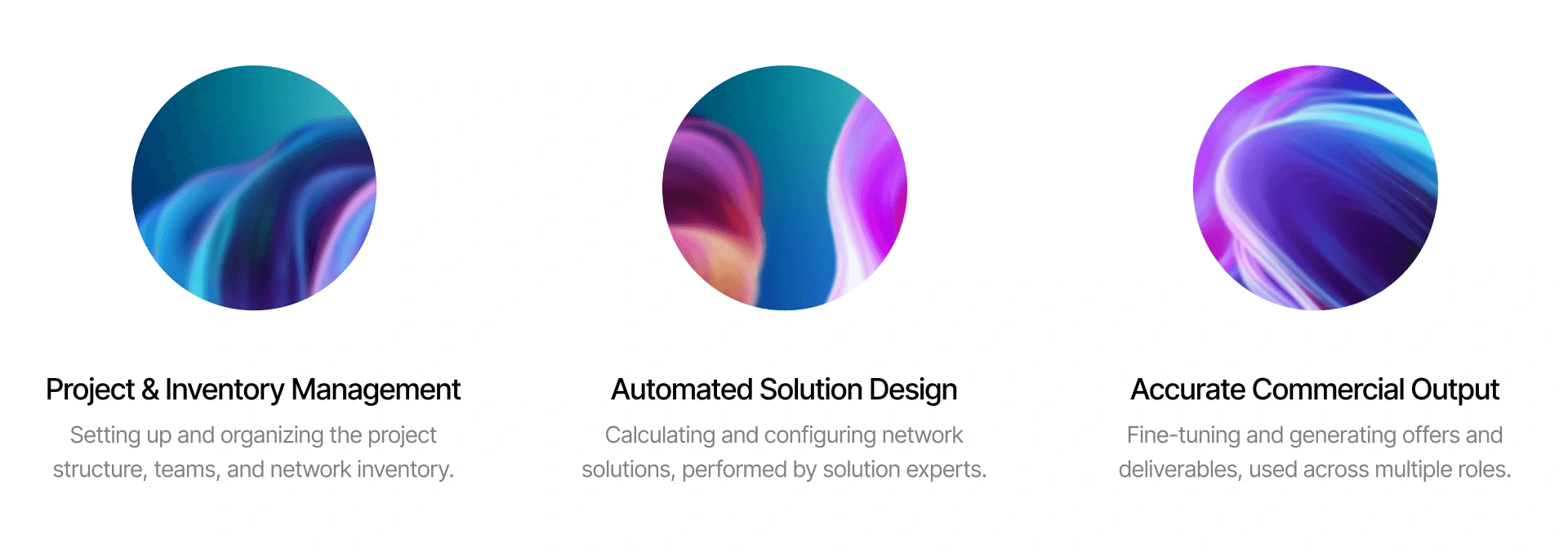
Through research and design exploration, we revealed three core use cases, each supporting a different roles across the network design process and mapped to distinct stages—from early project setup to final commercial deliverables.
The Process
The MVP phase
We started by mapping user flows and creating system diagrams to align design, product, and engineering during a period of unclear requirements and team restructuring. These artifacts helped establish a shared understanding and reduce ambiguity.
The work then formed into three core areas: project management, network calculation and configuration, and client-facing outputs, which shaped the product structure and guided key design decisions.
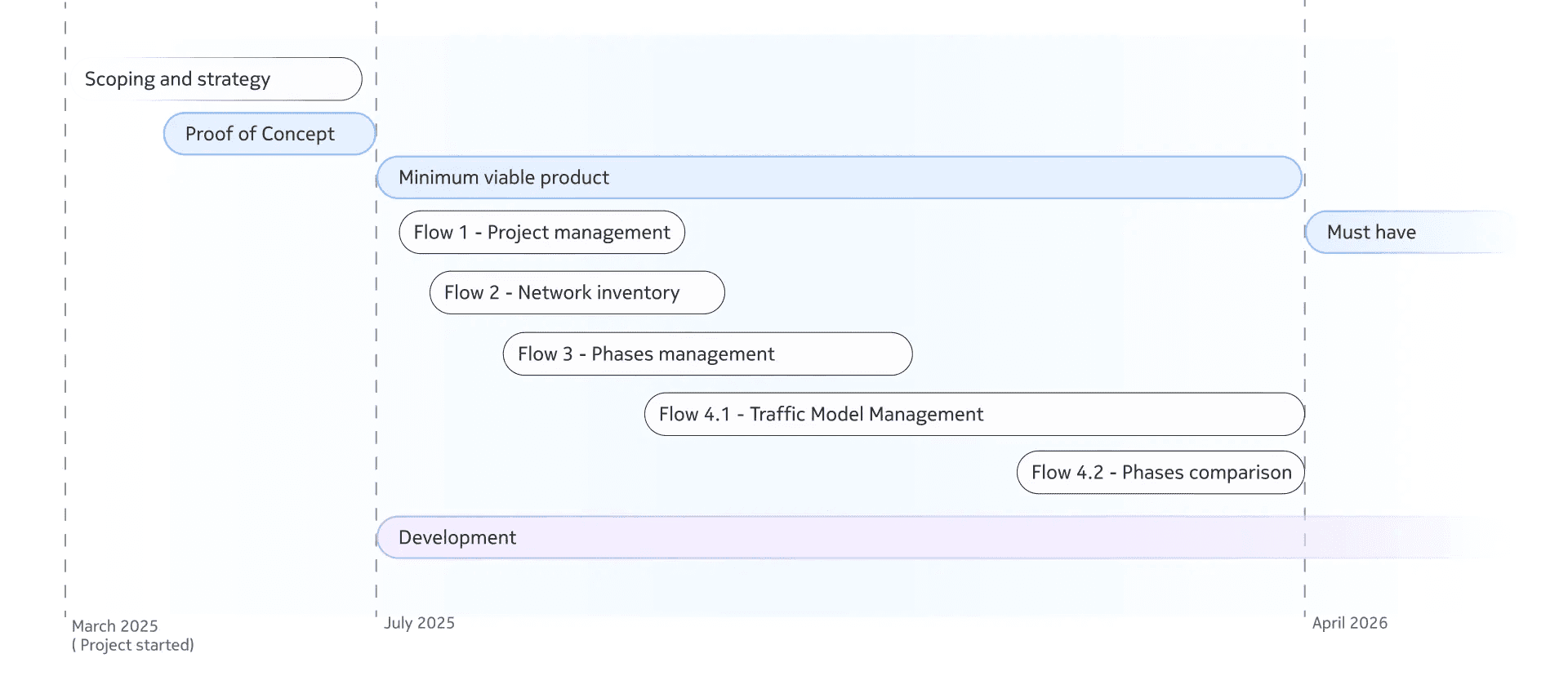
Given tight MVP constraints, much of the system became fixed once implemented, limiting flexibility and shifting the focus toward refining within existing boundaries while carefully identifying where iteration was still feasible.
My contribution
Primary design work: During MVP refinement, prioritized key workflows, designed core MVP deliverables, reduced design debt, and ensured design system alignment as the product transitioned from initial release to a more scalable architecture.
Usability Testing: Defined design goals and KPIs for the beta testing phase, facilitated user interviews, and led synthesis of qualitative and quantitative insights to identify usability issues and inform iterative design improvements.
Component Library: Updated and maintained the NGDS component library, ensuring consistency, accessibility, and scalability across product surfaces while keeping in line with NDS (Nokia design system).
note
Project Under NDA
Due to NDA restrictions, I can’t share additional details or visuals from this project.
I’m happy to to walk through my process, decisions, and contributions in more detail upon request.
Thank you!